Cellulose Blown-In Insulation for Retrofits: Improve Home Energy Efficiency and Cut Attic Insulation Costs
Cellulose blown-in insulation is a practical retrofit choice to boost attic performance and home comfort. Made mostly from recycled paper, it offers advantages over common options like fiberglass. Many homeowners want to lower energy bills, and blown-in cellulose can help do that. This guide covers the main benefits, how installation works in homes, comparisons with other insulation types, cost factors, and how to get free estimates for attic work.
Key Takeaways
- Blown-in cellulose reduces air leaks and raises thermal resistance to improve attic energy efficiency.
- Material and installation costs are often competitive, delivering long-term savings on utilities.
- Produced from recycled paper, cellulose is an environmentally friendly option that reduces waste and the home’s carbon impact.
- Proper retrofits include a thorough inspection, targeted air sealing, and even blowing for full coverage.
- Cellulose can offer higher R-value per inch and improved fire resistance compared to fiberglass.
- Good attic ventilation and moisture control are essential when adding cellulose to structures.
- Removing old insulation requires pre-inspection for hazards and careful cleanup before installing cellulose.
- Local contractors typically provide free estimates after an attic assessment and cost breakdown.
- With routine checks, cellulose can remain effective for more than 20 years.
What Are the Key Benefits of Cellulose Blown-In Insulation for Attic Retrofits?
Cellulose blown-in insulation brings several advantages that make it a solid retrofit choice for attics. Here are the primary benefits:
- Energy Savings: By sealing gaps and improving thermal resistance, cellulose helps lower heating and cooling expenses, producing meaningful savings over time.
- Cost-Effectiveness: In many cases, cellulose is affordable to buy and install, making it a smart option for homeowners watching their budgets.
- Environmental Impact: Because it’s made largely from recycled paper, cellulose reduces landfill waste and typically requires less energy to manufacture than some alternatives.
Adding cellulose lets homeowners improve comfort and manage ongoing energy costs while choosing a greener material.
How Does Cellulose Insulation Enhance Energy Efficiency and Indoor Comfort?
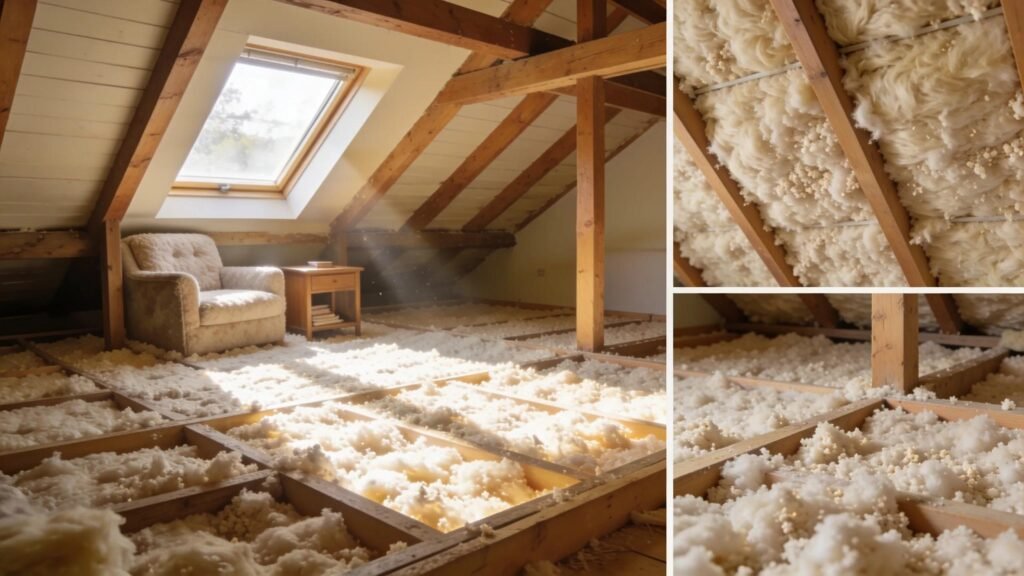
Cellulose works by filling cavities and minimizing air infiltration. When blown into the attic, it forms a dense layer that slows heat flow and helps maintain steady indoor temperatures. One measurable benefit is restoring or increasing R-value where existing insulation has settled or degraded over time.
Installations often include fire-retardant treatments, which adds a safety layer in addition to thermal performance. The result is a quieter, more consistent living environment.
This report outlines how cellulose insulation supports thermal comfort, details installation best practices, and highlights key technical considerations for effective use in homes.
Why Is Cellulose Considered an Eco Friendly Insulation Option?
Cellulose’s environmental benefit comes mainly from its makeup. Unlike many synthetic insulations, cellulose is largely recycled paper and cardboard, which keeps material out of landfills. Its production often uses less energy than fiberglass manufacture, lowering overall environmental impact.
Cellulose also helps dampen sound, offering both ecological advantages and improved acoustic comfort inside the home.
How Is Blown In Insulation Installed in Homes?
Experienced installers follow a straightforward process to add blown-in cellulose to homes:
- Inspection: The attic is checked for existing insulation, structural issues, and hazards to confirm the space is ready for work.
- Air Sealing: Installers seal gaps, penetrations, and leaks to maximize the benefit of the new insulation.
- Blowing Insulation: Using specialized equipment, cellulose is blown in to create even coverage across joists and voids.
This approach is minimally disruptive compared with removing and replacing blanket insulation in complex attic layouts.
What Does the Attic Insulation Removal and Replacement Process Involve?
Replacing attic insulation follows a careful sequence to keep the project safe and effective:
- Pre-Inspection: A full assessment checks for hazards such as asbestos or moisture damage before any removal begins.
- Removal Techniques: Technicians use vacuums and specialized tools to extract old insulation and prepare the space for the new material.
- Replacement Procedures: After cleanup, cellulose is installed to restore thermal performance and improve energy efficiency.
Following these steps helps ensure the retrofit meets safety and performance expectations.
Are There Special Considerations for Installing Cellulose in Homes?
Homes require extra attention to structural condition and moisture control. Framing and roof components should be inspected for deterioration. Adequate attic ventilation is crucial to prevent humidity buildup that could cause mold or rot.
Addressing these issues up front lets homeowners gain the benefits of cellulose without compromising the house’s condition.
How Does Cellulose Compare to Fiberglass and Other Insulation Types?
When evaluating cellulose against fiberglass and other options, key factors include R-value, longevity, and cost-effectiveness:
- R-Value Differences: Cellulose typically delivers a higher R-value per inch than fiberglass, improving insulating performance.
- Cost Comparisons: While prices vary, cellulose can be more economical over time because of its energy savings and durability.
What Are the R-Value and Fire Resistance Differences Between Cellulose and Fiberglass?
Cellulose generally has a higher R-value per inch than fiberglass and is commonly treated to meet fire safety standards. That treatment gives homeowners an extra margin of safety in addition to better thermal performance.
What Are the Cost and Longevity Advantages of Cellulose Vs Fiberglass?
Upfront costs for cellulose and fiberglass can be comparable, but cellulose often shows better long-term value through reduced energy bills and lasting performance. Many homeowners view it as a smart long-term investment.
What Are the Costs Involved and How to Access Free Estimates for Attic Retrofits?
Understanding insulation costs helps with planning. Common factors that affect price include:
- Type of Insulation: The material choice has a significant impact on total cost.
- Home Size: Bigger homes need more material and labor.
- Labor Costs: Professional installation adds to the upfront expense but often improves outcomes.
What Factors Influence Attic Insulation Cost for Cellulose Blown-In Services?
Pricing for cellulose services depends on several variables:
- Material Quality: Higher-grade products or special blends will raise material costs.
- Accessibility: Tight or difficult attic access can increase labor time and cost.
- Local Market Rates: Regional labor and supply prices affect the final estimate.
How Do Homeowners Request Free Insulation Estimates and What Should They Expect?
Requesting a free estimate usually involves contacting local insulation contractors by phone or online. At the visit, a technician will inspect your attic, evaluate existing insulation, and provide a transparent cost breakdown with recommended options so you can decide with confidence.
How to Maintain Cellulose Blown-In Insulation for Long-Term Performance?
Routine maintenance preserves cellulose performance. Periodic inspections can spot settling, moisture issues, or pest problems so you can address them quickly. Timely repairs keep the insulation working as intended.
How Long Does Cellulose Insulation Last and When Should It Be Replaced?
With proper installation and upkeep, cellulose often performs well for more than 20 years. Replacement should be considered if you see moisture damage, compression, or a clear loss in energy efficiency.
What Are Common Signs Indicating Insulation Needs Repair or Replacement?
Watch for these indicators that maintenance or replacement may be needed:
- Energy Bill Increases: Rising heating or cooling costs can signal poorer insulation performance.
- Room Temperature Discrepancies: Uneven temperatures or drafts point to gaps in the thermal envelope.
Noticing these signs early helps you act before problems become costly.
Frequently Asked Questions
Can cellulose blown-in insulation help with soundproofing?
Yes. Cellulose’s density helps absorb and reduce sound transmission between rooms and from outside, making it a practical option for improving acoustic comfort in noisy areas.
What qualifications should I look for in an insulation contractor?
Choose contractors with experience installing cellulose, proper certifications, and insurance. Ask about warranties and check customer reviews or references to confirm workmanship and reliability.
Is cellulose insulation susceptible to pests?
Quality cellulose products are often treated with additives that discourage pests. Proper installation and sealing of entry points further reduce the risk. Regular attic inspections help detect any early signs of pest activity.
What is the expected return on investment for cellulose insulation?
Cellulose typically yields a positive return through lower utility bills and improved home comfort. Payback periods vary, but many homeowners see meaningful savings within a few years, along with potential resale value benefits.
Are there any health concerns related to cellulose insulation?
Cellulose is generally safe when it meets industry safety standards and is properly installed. It is treated for fire resistance and sometimes pest control. To minimize dust or exposure during installation, rely on qualified installers and follow their guidance.
How does moisture affect cellulose insulation?
Moisture control matters. Excess humidity can reduce effectiveness and encourage mold. Proper attic ventilation and prompt repair of leaks are essential. If insulation becomes wet, it should be replaced to protect indoor air quality and performance.
Conclusion
Cellulose blown-in insulation can cut energy costs, improve comfort, and lower environmental impact, making it a strong retrofit option for many homeowners. Its combination of performance and sustainability makes it worth considering for attic upgrades. Contact local contractors to arrange a free estimate and find the best solution for your home.
