Crawl Space Insulation and Encapsulation: A Complete Guide to Moisture Control and Energy Savings
Crawl spaces are easy to forget, but they have a big impact on your homes comfort and energy use. Proper insulation and encapsulation stop moisture, limit mold risk, and help lower heating and cooling costs while improving indoor air quality. This guide explains the benefits, how the work is done, common costs, and practical steps you can take. If humidity or high energy bills are a concern, addressing the crawl space is often one of the most effective solutions. We walk through inspection, insulation options, and maintenance so you can make a confident decision for your home.
Key Takeaways
- Insulating and encapsulating a crawl space can improve home energy efficiency and often reduce utility bills by about 10 to 20 percent.
- Installing a continuous vapor barrier and sealing gaps keeps moisture out and protects structural components.
- Choosing insulation with a higher R-value increases thermal resistance and helps HVAC systems run less often.
- Stopping mold starts with regular inspections, good drainage, dehumidification, and proper ventilation.
- Project costs vary widely; many contractors offer financing and free estimates to help budget the work.
- Homes generally benefit from reinsulating to replace degraded materials and restore efficiency.
- Modern materials like dense foam boards and spray foam offer strong moisture control and long-term performance.
- Designs that limit ventilation and use controlled mechanical exhaust, combined with solid insulation, maintain lower humidity and reduce indoor pollutant transfer.
What Are the Key Benefits of Crawl Space Insulation and Encapsulation?
Insulating and encapsulating a crawl space delivers several practical benefits for homeowners. You can expect better energy performance, lower utility bills, reduced mold risk, and cleaner air in living spaces.
If youre aiming to improve performance or solve moisture problems, professional guidance can be helpful. Insulation contractors typically provide assessments and free estimates, which make it easier to compare approaches and costs.
In What Ways Does Insulation Enhance Energy Savings?
Insulation in the crawl space helps control heat transfer, keeping warm air where you want it in winter and keeping heat out in summer. The main drivers of energy savings include:
- Energy Cost Reductions: Homes with poorly insulated crawl spaces can lose a lot of conditioned air. Upgrading insulation can lower bills by roughly 10 to 20 percent.
- Impact of R-Value: R-value measures thermal resistance. Higher R-values reduce heat flow and improve overall energy retention.
- HVAC Efficiency: With a better-insulated envelope, heating and cooling systems run less frequently, which can extend equipment life and boost efficiency.
How Is Crawl Space Sealing and Vapor Barrier Installation Performed?
Sealing the crawl space and installing a vapor barrier are key steps to control moisture and protect the home’s structure. The work follows a set of best practices to achieve a durable, watertight result.
This handbook is a practical reference for optimizing insulation during both new construction and retrofit projects. It includes guidance on construction details that support thermal and vapor control, drainage, waterproofing, and strategies to limit mold, pests, and radon.
What Are the Step-by-Step Processes for Effective Sealing?
- Preparation: Remove debris, inspect for standing water and existing damage, and identify entry points for moisture.
- Sealing Cracks: Fill gaps in walls, rim joists, and the subfloor with appropriate sealants or foam to stop air and moisture movement.
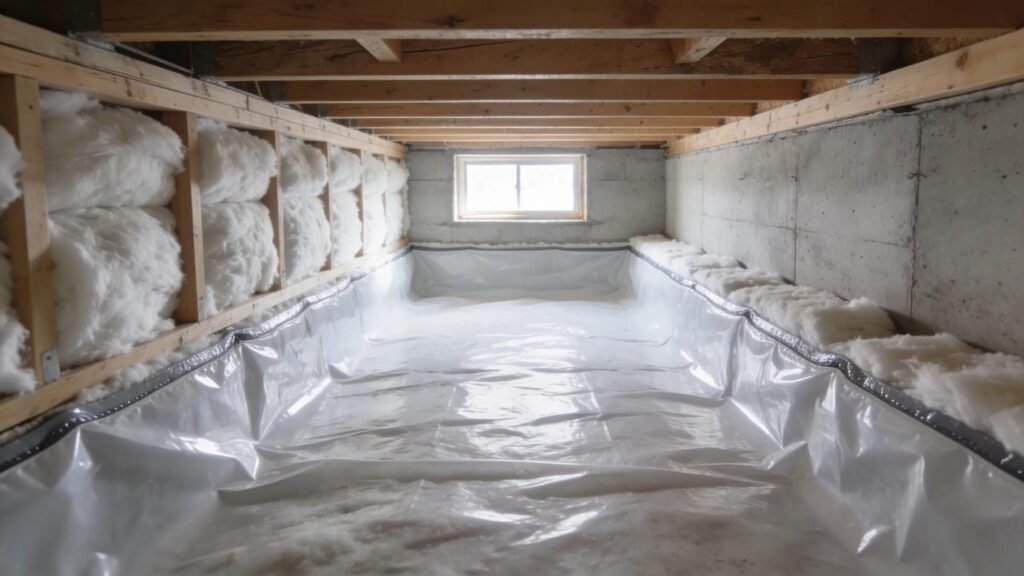
- Installing Vapor Barriers: Cover the entire crawl space floor and extend the material up the walls using heavy-duty sheeting (commonly 6 mil or thicker) to form a continuous barrier.
- Securing the Barrier: Fasten and tape seams so the barrier is continuous and cannot lift or gap where moisture could enter.
- Installing Insulation: Add insulation to walls or between floor joists as recommended, making sure the vapor barrier and insulation work together to manage moisture and temperature.
How Much Does Crawl Space Insulation and Encapsulation Cost?
Project cost depends on crawl space size, materials, labor, and the condition of the area. Knowing likely cost components helps when budgeting for a retrofit or new installation.
Are Financing and Free Estimate Options Available?
Many contractors offer financing to spread project costs and provide free estimates so you can compare options. Typical price elements include:
- Inspection Costs: Initial assessments commonly range from a fair, project-based price
- Insulation Costs: Material and install costs often run from about a competitive per-square-foot range, depending on the product chosen.
- Encapsulation Services: Complete encapsulation projects typically range from a fair, project-based price depending on complexity and size.
What Are Effective Mold Prevention Strategies in Crawl Spaces?
Moisture encourages mold, so preventing damp conditions is essential. Implementing several measures together provides the best protection.
What Maintenance Practices Support Long-Term Mold Prevention?
- Regular Inspections: Check the crawl space at least twice a year and after heavy storms for leaks, water staining, and odors.
- Water Management: Maintain grading and drainage around the foundation and keep gutters and downspouts clear to divert water away from the house.
- Dehumidification: Use a crawl-space-rated dehumidifier to hold relative humidity in a range that limits mold growth, generally 30 to 50 percent when feasible.
- Ventilation: Improve airflow when appropriate; in many cases a controlled mechanical approach works better than relying on open vents alone.
How to Identify Crawl Space Damage and When to Reinsulate Homes?
Spotting crawl space problems early prevents larger repairs. Look for visible signs and use professional evaluations when in doubt.
Why Is Reinsulating Homes Critical for Efficiency?
Insulation breaks down over time and can be damaged by moisture or pests. Reinsulating restores thermal performance and can reduce energy costs. Consider these points:
- Damage Indicators: Moisture stains, active mold, pest presence, or a cold floor above the crawl space point to problems.
- Impacts of Poor Insulation: Inadequate insulation raises energy use and can allow pollutants from the crawl space to affect indoor air quality.
- Recommendations for Action: A professional assessment will identify necessary repairs and the most effective insulation strategy for your home.
Which Crawl Space Insulation Products and Technologies Are Best?
Material choice affects performance and durability. Match the product to your moisture conditions, budget, and desired thermal performance.
What Are Emerging Innovations in Crawl Space Encapsulation Materials?
New and improved products give homeowners better long-term control over moisture and heat loss:
- High-density Foam Boards: Provide strong insulation and resist moisture absorption.
- Spray Foam Insulation: Seals gaps and forms a tight thermal and air barrier, which is useful for irregular cavities.
- Reflective Barriers: When paired with other insulation, they can reduce radiant heat transfer and improve overall performance.
These options help reduce moisture-related problems and improve energy efficiency, making them worth considering for upgrades. Further research shows that crawl spaces with high insulation levels and controlled minimal ventilation perform well at keeping humidity low and protecting wooden floor systems.
Minimally Ventilated, Highly Insulated Crawl Spaces for Moisture Management
SUMMARY: Typical practice uses outdoor air to ventilate crawl spaces, which can raise humidity in some climates. This study evaluated a design that replaces conventional openings with limited mechanical exhaust and high levels of insulation. Field monitoring in several homes over a year showed consistently low relative humidity, usually under 75 percent with only short periods near 80 percent, even as new construction dried. The results support this approach as an effective moisture-control solution for buildings with wood floors. Highly insulated crawl spaces with controlled minimal ventilation, proof of concept by field measurements, 2020
Frequently Asked Questions
1. How do I choose the right insulation material for my crawl space?
Pick a material based on climate, moisture exposure, budget, and the desired R-value. Fiberglass batts are economical but less moisture tolerant. Spray foam offers excellent sealing and moisture resistance but costs more. High-density foam boards balance durability and moisture resistance. A contractor can help weigh pros and cons for your situation.
2. How often should I inspect my crawl space for maintenance?
Inspect the crawl space at least twice a year, ideally in spring and fall, and after heavy rains or a major storm. During inspections look for standing water, damp insulation, musty smells, and signs of pests.
3. Can I perform crawl space insulation on my own, or do I need professional help?
DIY is possible for simple projects, but professional installation reduces risk of improper sealing, trapped moisture, and code compliance issues. Pros have the tools and materials to address vapor control, insulation, and any structural concerns.
4. What are the signs that my crawl space insulation needs to be replaced?
Replace insulation if you see mold, wet or compressed material, animal damage, or if your home shows symptoms like higher energy bills or cold floors. If an inspection finds lost R-value or deterioration, plan for reinsulation.
5. What additional measures can improve moisture control in my crawl space?
Complement insulation with a sump pump if needed, a crawl-space-rated dehumidifier, proper grading, and maintained gutters and downspouts. These steps work together to keep water away from the foundation and reduce long-term moisture risk.
6. Are there any building codes or regulations for crawl space insulation?
Codes vary by location and climate zone, including R-value and installation requirements. Check with local building authorities or hire a contractor familiar with regional codes to ensure compliance and safety.
Conclusion
Insulating and encapsulating your crawl space is one of the most effective ways to improve comfort, cut energy costs, and reduce moisture-related risks like mold and rot. A professional assessment will help you choose materials and a strategy that match your homes needs, and many contractors offer financing or free estimates to help plan the work. Contact an experienced team to evaluate your crawl space and outline the next steps toward a drier, more efficient home.
