
Typical Insulation Installation: Costs, Benefits, and a Step-by-Step Guide for Attics and Walls
Proper insulation makes a big difference in how a home feels and how much energy it uses. This guide walks homeowners through the common insulation types for attics and walls, the typical installation steps, how reinsulating homes helps, key cost considerations, and basic upkeep tips. With a clearer picture of the process, you can make choices that improve comfort and reduce energy bills.
Key Takeaways
- Good insulation reduces heat loss and air leaks to improve comfort and lower energy use.
- Common options for attics and walls include blown-in, batt roll, and spray foam, each suited to different needs.
- Blown-in insulation fills irregular cavities well; batt roll fits standard framing and is easier for DIY projects.
- Spray foam seals gaps and resists moisture, offering high performance despite higher upfront cost.
- Typical installation steps are inspection, old material removal when needed, correct placement, and careful sealing.
- Reinsulating homes evens out temperatures, cuts energy costs, and can increase resale value.
- Costs depend on material, square footage, and whether removal is required; many providers offer free estimates online.
- Watch for moisture damage, rising utility bills, and uneven indoor temperatures as signs insulation may need replacement.
- Routine inspections, proper ventilation, and keeping insulation areas clean help preserve performance over time.
What Are the Main Types of Insulation Used in Attics and Walls?
For attics and walls, the most common materials are blown-in loose fill, batt roll (pre-cut batts), and spray foam. Each has strengths and trade-offs, so the best choice depends on the space, budget, and performance you need.
How Does Blown-In Insulation Compare to Batt Roll Insulation?
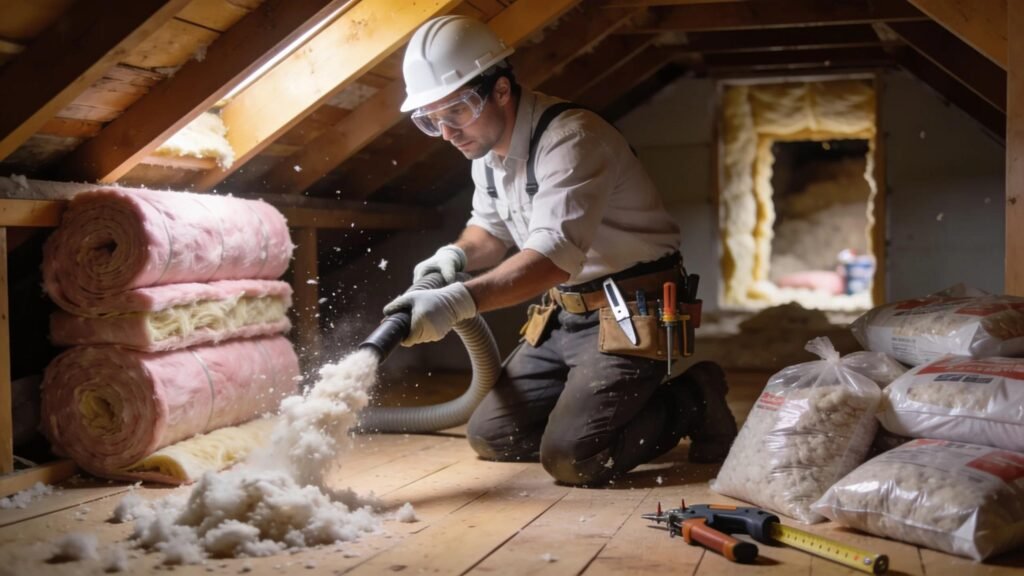
Blown-in insulation is applied as loose material that settles into uneven cavities, making it ideal for irregular or hard-to-reach areas. Batt roll comes in pre-cut sheets sized for standard framing and installs more quickly in regular cavities. Blown-in can cost more because it needs special equipment and labor, but it often delivers better coverage and thermal performance. Choose based on the shape of the space and your budget priorities.
What Are the Benefits of Spray Foam and Other Insulation Materials?
Spray foam expands to fill gaps and provides strong air sealing and high R-value per inch. It helps block drafts, limits moisture intrusion, and can add a measure of structural support. While spray foam is more expensive up front, it often delivers energy savings and improved comfort that justify the cost over time.
What Are the Step-by-Step Processes for Typical Insulation Installation?
Installation follows a consistent sequence, adapted to the insulation type and the area being worked on.
How Is Attic Insulation Prepared, Removed, and Installed Professionally?
A professional job usually starts with a careful inspection to evaluate existing conditions and identify moisture, pests, or damage. If old insulation is degraded, it is removed before new material goes in. Installers place the chosen insulation to recommended depths and densities, and then seal any gaps, vents, or penetrations to ensure the system performs as intended.
What Cleanup and Inspection Practices Ensure Quality Installation?
After installation, crews clear away debris and excess material and follow disposal guidelines. A final inspection checks for uniform coverage, proper sealing, and any missed spots. This close-out step confirms the work meets performance and safety standards.
Why Reinsulating Homes Improves Comfort and Energy Efficiency?
Many homes were built with thinner or missing insulation, which leads to uneven temperatures and higher heating and cooling costs. Updating insulation reduces heat loss, stabilizes indoor temperatures, and can lower utility bills. It also addresses drafts and cold spots, making rooms more comfortable while often raising the home’s market appeal.
How Much Does Attic Insulation Installation Cost and How to Get Free Estimates?
Price varies by material, the size of the area, and local labor rates, as well as whether old insulation must be removed. Getting several free estimates helps you compare costs and services.
What Factors Influence the Cost of Blown-In and Batt Roll Insulation?
Key cost drivers include:
- Size of the Area: Bigger projects need more material and labor, which raises the total cost.
- Type of Insulation: Materials differ in price and performance; spray foam generally costs more but offers greater air sealing and R-value.
- Current Insulation Conditions: Removing old, contaminated, or wet insulation adds expense to the job.
How Can Homeowners Obtain Accurate Free Estimates Online?
Use local contractor sites or insulation provider portals and supply clear details on square footage, the current insulation state, and any access issues. Photos and measurements will improve estimate accuracy. Many companies also offer free consultations and on-site visits for a precise quote.
How Long Does Attic and Wall Insulation Last and When Is Replacement Needed?
With proper installation and maintenance, insulation can last many years, but conditions like moisture, pests, or compression shorten its life and reduce performance.
What Are Common Signs That Insulation Requires Removal or Replacement?
Look for these warning signs:
- Moisture Issues: Damp, stained, or moldy insulation shows it’s been compromised.
- Increased Energy Bills: A noticeable rise in heating or cooling costs can indicate failing insulation.
- Temperature Fluctuations: Rooms that are consistently too hot or too cold suggest gaps or degraded insulation.
How to Maintain Insulation for Longevity and Sustained Performance?
Simple maintenance steps help keep insulation effective:
- Regular Inspections: Check insulation annually or after severe weather to spot problems early.
- Proper Ventilation: Good airflow prevents moisture buildup that damages insulation.
- Dusting and Cleaning: Keep surrounding areas clear of debris to preserve R-value and airflow.
What Are Expert Tips for Successful Batt Insulation Installation?
Batt insulation performs well when installed with care and attention to detail.
How to Install Batt Insulation Correctly to Maximize Effectiveness?
Follow these practical steps:
- Ensure Proper Sizing: Cut and fit batts so they fill cavities without gaps or overlapping.
- Seal Gaps: Use caulk, tape, or foam to close gaps around electrical boxes, pipes, and framing.
- Avoid Compression: Install batts at their intended thickness to preserve R-value and airflow.
What Are Common Mistakes to Avoid During Batt Roll Installation?
Common errors that reduce performance include:
- Incorrect Sizing: Loose or crushed batts lower overall effectiveness.
- Inadequate Sealing: Unsealed gaps let air bypass the insulation and reduce efficiency.
- Ignoring Safety Measures: Wear protective gear to avoid irritation from fibers and follow handling recommendations.
Frequently Asked Questions
What steps should homeowners take before starting insulation installation?
Start with a thorough inspection of the current insulation and structure. Check for moisture, pests, and ventilation problems, and measure the spaces that need work. Think about the climate and the performance you want, then set a budget that covers materials, labor, and any removal of old insulation.
Are there any health concerns associated with insulation materials?
Certain materials can cause irritation if handled improperly. Fiberglass can irritate skin, eyes, and lungs, so wear protective clothing and masks. Spray foam involves chemicals and should be applied by trained installers who follow safety protocols. Consider lower-risk options like cellulose when health concerns are a priority.
How can homeowners choose the right insulation type for their specific needs?
Compare R-values, air-sealing performance, installation complexity, and cost. Consider the area to be insulated and any access challenges. Consulting an insulation professional helps match the material to your home’s unique needs and budget.
What financing options are available for insulation installation projects?
Options include home equity loans, personal loans, contractor financing plans, and government rebates or tax credits for energy-efficient upgrades. Check local utility incentives and federal programs that support insulation improvements.
How frequently should insulation be inspected for damage or wear?
Inspect insulation at least once a year and before extreme seasons. Also check after heavy storms or known pest activity. Regular checks catch issues early so you can repair or replace insulation before performance declines significantly.
Can homeowners install insulation themselves, or should they hire professionals?
DIY installation is feasible for simple batt projects with basic tools, but blown-in and spray foam typically require professional equipment and experience. Pros ensure proper coverage, sealing, and safety and often provide warranties on their work.
Conclusion
Investing in the right insulation improves home comfort and reduces energy costs over time. Whether you choose blown-in, batt roll, or spray foam, proper installation and routine maintenance are key to getting the best results. Use the tips and checks in this guide to plan your project and speak with trusted professionals to identify the right solution for your home.
