By Daniel Myrand, REINSULATE LLC
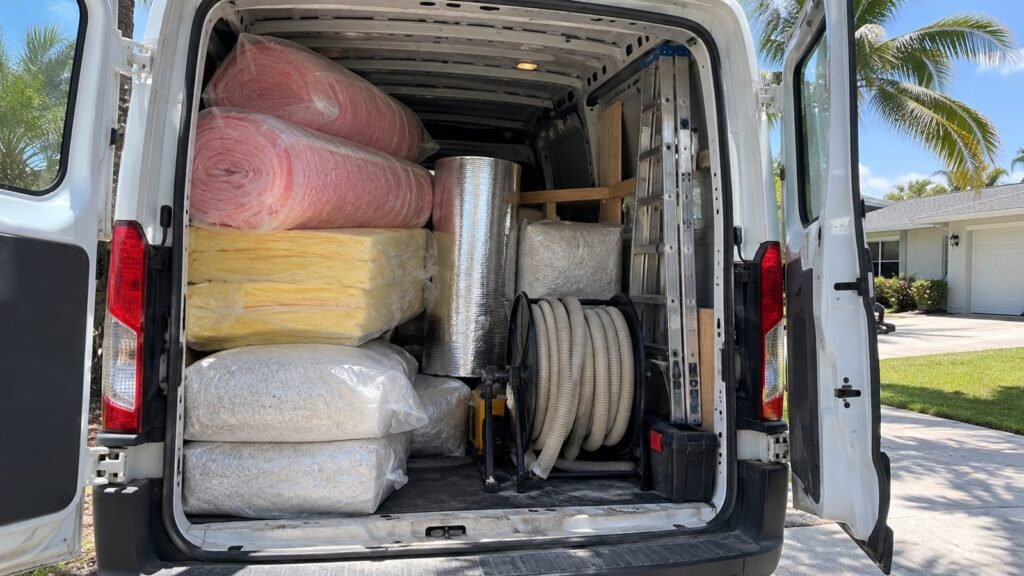
Choosing the right insulation is key to keeping your home comfortable and saving energy in Florida’s hot and humid climate. There are different types of insulation, each made for different parts of your home and handling heat and moisture in their own ways. This guide will explain six common types: blown-in fiberglass, cellulose, batt and roll fiberglass, mineral wool, spray foam, and radiant barriers. We’ll also look at what works best in an attic in Bradenton, Sarasota, and Manatee County.
Blown-In Fiberglass Insulation
Blown-in fiberglass is made of tiny glass fibers that are fluffed up and blown into spaces like attic floors or wall cavities. It fills gaps well and is lighter than some other types. It is less expensive and can be added on top of existing insulation to boost your home’s thermal barrier. In Florida, blown-in fiberglass helps keep heat from coming through your attic, but it must stay dry. If it gets wet from leaks or high humidity, it can lose effectiveness.
Cellulose Insulation
Cellulose is made from recycled paper treated to resist fire and pests. It is usually blown in as loose-fill, filling cracks and gaps tightly. It works well to seal air leaks and improve thermal control, which helps with cooling in Florida’s heat. But because it is made from paper fibers, it can absorb moisture. So proper attic ventilation and vapor barriers are important to keep cellulose dry and prevent mold or damage.
Batt and Roll Fiberglass Insulation
Batts and rolls of fiberglass are pre-cut panels or long sheets that fit between studs or joists in walls and attics. This type is easy to handle and a common choice in many homes. It does well when dry, but can lose performance if compressed or wet. In Florida, it’s important to install a good moisture barrier above batts to avoid dampness from humidity or roof leaks.
Mineral Wool Insulation
Also called rock wool, mineral wool is made from natural stone and recycled materials. It is denser and heavier than fiberglass and offers strong resistance to fire. Mineral wool handles moisture better than fiberglass or cellulose if it stays dry and keeps its shape over time. It also reduces noise well. In Florida attics, mineral wool is often the best choice because it deals better with humidity and heat and adds safety through fire resistance.
Spray Foam Insulation
Spray foam is a liquid that expands into a foam when applied, sealing gaps tightly and sticking to surfaces. It creates a strong air barrier and keeps moisture out when applied correctly. This helps in the hot Florida climate by reducing heat and humidity from entering the attic. Although spray foam can be very effective, it often requires professional installation to do the job right.
Radiant Barrier
A radiant barrier is a reflective material usually installed under the roof decking in an attic. It works by reflecting radiant heat away from your living space, helping lower attic temperatures. This can make your home cooler and reduce air conditioning use in Florida’s sun and heat. Radiant barriers do not add insulation but work well combined with other types of insulation to improve heat control.
Short Comparisons Between Insulation Types
For detailed side-by-side comparisons of some popular types, check out our Fiberglass vs. Cellulose article and Blown-In vs. Batt article. These cover pros and cons, costs, and best uses in more detail.
Which Insulation Is Best for a Florida Attic?
Florida attics have to handle a lot of heat, humidity, and sometimes rain getting in. This means the insulation needs to resist moisture and stay effective in the heat. Mineral wool insulation is often the best overall choice for a Florida attic. It resists moisture, holds up well over time, and adds fire safety.
Blown-in fiberglass and batt fiberglass can work if installed well with proper moisture barriers and ventilation. Cellulose is good for air sealing but needs careful installation to avoid moisture problems. Spray foam is very effective but requires professional installation, and radiant barriers help by reflecting heat but do not replace insulation.
Ultimately, choosing the right insulation depends on your attic’s condition and how well the product is installed. Working with trusted local professionals like REINSULATE can ensure your insulation performs well to keep your home comfortable and energy efficient.
Benefits of Proper Insulation in Florida Homes
- Stops heat from entering living spaces and lowers cooling costs.
- Keeps indoor temperatures steady and comfortable.
- Prevents moisture buildup that causes mold and wood rot.
- Reduces drafts and hot or cold spots inside your home.
- Supports energy saving and environmental goals.
Get a Free Attic Inspection
REINSULATE is veteran-owned and proud to serve Manatee and Sarasota counties. We offer free estimates and a special limited-time offer: free garage attic insulation (up to 500 sq ft) when you have your home’s attic insulation removed and replaced. Terms apply. Visit letsreinsulate.com/free-garage-insulation/ to see if you qualify, or call 941-705-0305 to schedule your free attic inspection today.
