
By Daniel Myrand, REINSULATE LLC
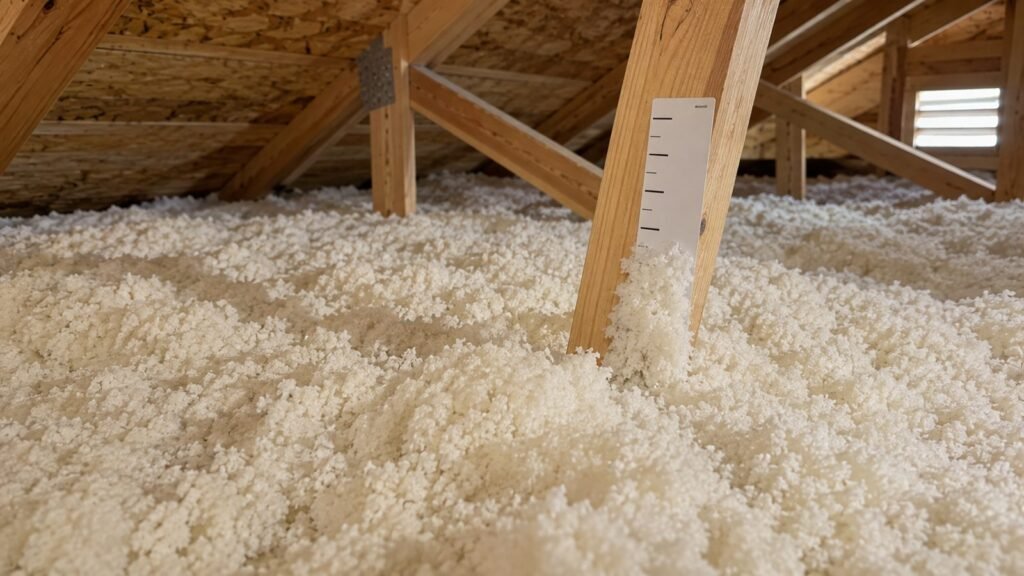
What is R-value? It measures thermal resistance. Thermal resistance is how well insulation stops heat from moving through it. Higher R-value means better resistance and better performance. In Florida attics, many homes start with about R-30 but often drop below R-10 over time. This happens because insulation settles and gets squished, which makes air conditioners work harder and raises energy bills.
Key Takeaways
- R-value explained: it shows how well barriers block heat flow inside buildings.
- Higher insulation R-values mean stronger resistance to heat and lower energy bills.
- The building and construction industry uses R-value as a standard way to measure insulation.
- REINSULATE LLC in Bradenton, Florida, uses R-value testing to check insulation’s condition.
What Does R-Value Actually Measure?
R-value tells us how hard a material works against heat trying to pass through it. Think of it like a roadblock for heat: a bigger roadblock means less heat gets into your living room.
The name says it all. “R” stands for resistance value. It shows how well insulation blocks heat moving through it. This is not just marketing talk. It’s a tested, legal measurement.
Is R-Value the Same Thing as Thermal Resistance?
Yes. Thermal resistance is the science behind it and R-value is the number used in building and energy rules. Contractors compare thermal resistance ratings when picking products.
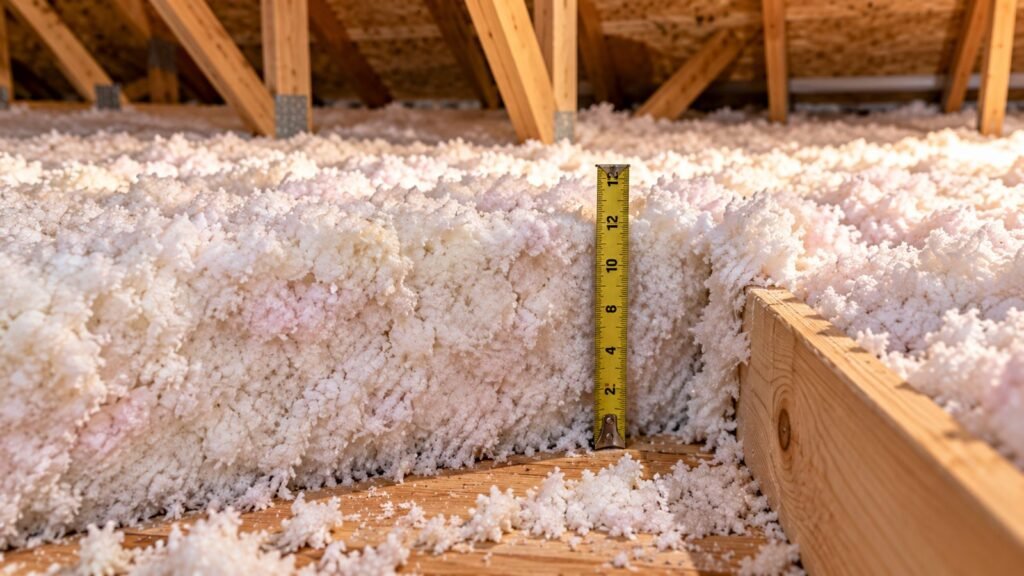
This matters for Manatee County homeowners. Insulation R-value doesn’t stay the same after your attic is built. Florida’s heat and humidity break it down year by year, lowering its performance without most people noticing.
We’ve looked at attics that started strong but quietly lost their strength:
- Original rating: R-30, the usual standard for Florida attics
- Years later: below R-10, about a third of original resistance
- What homeowners notice: higher bills, uneven room temperatures, AC running all the time
This change happens slowly and goes unseen until bills get higher.
Is R-Value the Same as Thermal Resistance?
Simply put, yes. Both describe the same property, but “R-value” has legal meaning. The Federal Trade Commission’s R-value Rule came about after false claims by insulation sellers in the 1970s. It requires testing with specific ASTM lab methods. That makes R-value a regulated, standard number, not just an engineering idea.
Think of thermal resistance as the idea, and R-value as the legally backed measure of that idea. Any insulation sold in the U.S. must have R-value verified by these tests. This helps protect consumers and makes it easier to compare insulation.
Does a Higher Lab R-Value Always Mean Better Performance at Home?
Not always. A product’s lab-rated insulation R-value and how it works in your attic are often different. Things like compression, moisture, gaps, and age lower insulation’s real resistance over time.
This explains why upper rooms in a house often feel hot and why the AC runs longer even when the attic had good insulation originally.
Why Does This Matter for Older Manatee County Homes?
Many older homes here were insulated to levels far below today’s recommendations. So, the R-value on old paperwork usually does not match what’s really protecting your ceiling now.
How Do Labs Test R-Value?
Labs measure thermal resistance using the standard test ASTM C518. They place a sample of the material between two plates, one hot and one cold, to see how much heat passes through. The plates don’t let air pass, so the test measures heat flow through the material only. This control makes the number reliable for labeling insulation.
The lab process is:
- Cut a sample to a set size and thickness.
- Put it between air-tight hot and cold plates.
- Keep each plate at a fixed temperature.
- Measure how much heat passes through the sample.
- Calculate resistance from the heat flow.
We keep this process in mind in every hot Manatee County attic. The R-value on packaging shows lab results. Real results in Florida depend on installation. Gaps, squishing, and moisture lower the number fast.
Does installation quality affect R-value?
Yes, it does. Our crews have OSHA-30 certification. This means we handle coverage, depth, and ventilation carefully during install. Even the best product won’t work right if it’s installed with gaps or crushed.
Can a lab number tell you if your attic still performs?
Not by itself. Our team uses over 21 years of experience to judge if an attic’s insulation still holds near its original R-value. Settled, flat, or wet material rarely matches what the lab tested.
What Factors Change a Material’s R-Value?
Material type causes the biggest differences in insulation R-value between products. Dense materials like phenolic foam offer more resistance per inch than fiberglass or poured concrete. Two products with the same thickness can work very differently. That is why price per bag or square foot doesn’t tell the full story.
Thickness also matters, but is just part of the picture once material type is set. We talk about both with homeowners during free estimates. These two things together decide how well your attic or wall works.
Does R-value apply to a whole wall or just the insulation?
Thermal resistance can describe a single material like fiberglass insulation or an entire wall, ceiling, or window. This matters because energy codes usually set minimum R-values for whole assemblies, not just the insulation layer inside.
Why does R-value drop even when nobody touches the attic?
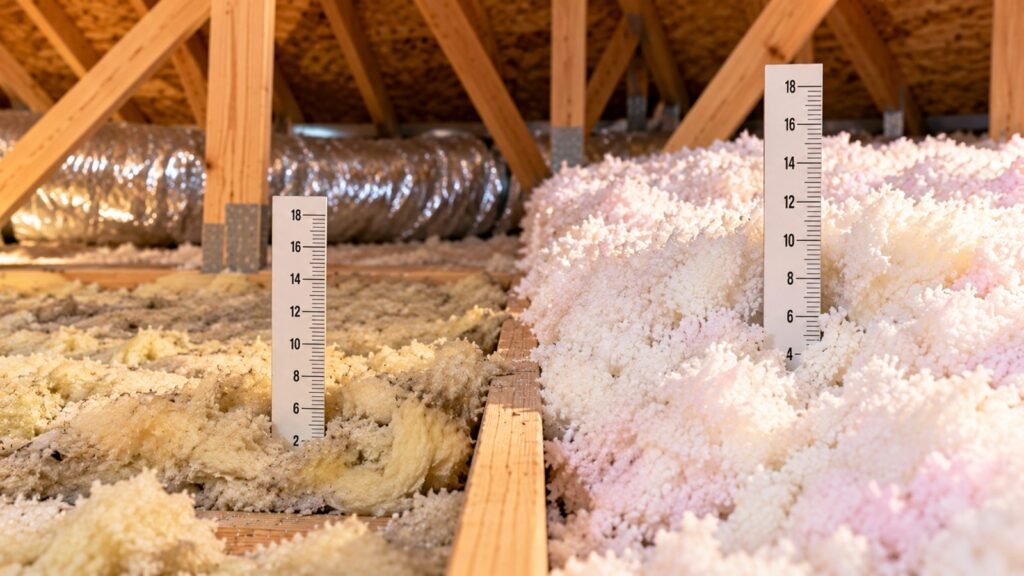
Heat and humidity slowly break down insulation fibers. This flattens material that once worked well. A well-built attic with R-30 insulation can slip below R-10 after decades in Florida’s heat. This happens slowly and without obvious signs, so many attics underperform without damage you can see.
We see this issue in every part of the home, not just attics. Our services include blown-in attic insulation, full removal and replacement, batt and roll insulation, wall insulation, and crawl space work throughout Manatee County.
Why Does Your Attic’s R-Value Matter in Florida?
Florida heat wears down attic insulation faster than most places. The U.S. Department of Energy recommends a range of about R-30 to R-49 for attics here. That range exists because Manatee County summers have long periods of heat. When insulation gets weaker, heat gets into your living space, and the air conditioner works too hard all day.
Here is what surprises many homeowners.
How much protection are Florida attics really losing?
Many local homes have about half the attic insulation they should. Over time, insulation mats down from humidity and gets worn by heat cycles. No one notices the slow drop until rooms get hot or uneven. Often, by then, the insulation has lost about half its original R-value.
This loss matters because thermal resistance is not a one-time thing. It fades over time and costs you more money every month.
Is it always worth re-insulating an attic?
Not always. We tell homeowners honestly if their home doesn’t need re-insulating. REINSULATE offers free assessments and wants to earn your trust, not just sell a job.
We are in Bradenton, Florida, serving Manatee and Sarasota counties with work made for our climate. Understanding R-value explained in simple words helps you get a comfortable home and lower power bills.
FAQ
What is R-value?
R-value measures how well a material stops heat moving through it. Higher numbers mean better resistance and insulation.
Is R-value the same as thermal resistance?
Yes. Thermal resistance is the science. R-value is the tested and legal measurement that follows federal rules.
Does a higher lab R-value guarantee better real-world performance?
No. Compression, moisture, gaps, and age lower insulation performance over time, so lab ratings may not match real attic results.
Get a Free Attic Inspection
REINSULATE is a veteran-owned company serving Manatee and Sarasota counties. We offer free estimates and are running a limited-time offer: free garage attic insulation (up to 500 square feet) when you have your home’s attic insulation removed and replaced. Terms apply.
Visit letsreinsulate.com/free-garage-insulation/ to see if you qualify, or call 941-705-0305.
