
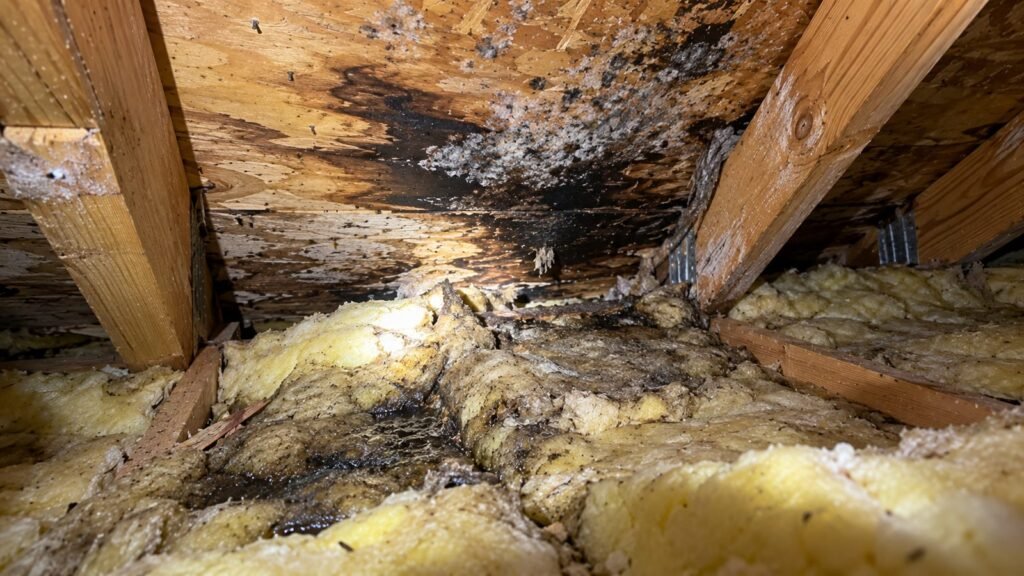
Florida attics deal with a lot of water. There’s the humid air every day, the summer storms, and the small roof leaks nobody notices until there’s a stain on the ceiling. Insulation that gets wet doesn’t bounce back. It goes flat, it holds moisture, and sometimes it starts to grow mold. When that happens, adding more insulation on top won’t fix it. The old stuff has to come out.
Why wet insulation stops working
Insulation works because it traps tiny pockets of air. When fiberglass or cellulose gets wet, those pockets collapse. The layer gets thinner and heavier, and heat moves right through it. Even after it dries, it rarely gets its full thickness back. So a spot that got soaked during a storm a few years ago may still be doing almost nothing today.
Signs your attic insulation is wet or moldy
- A water stain on a ceiling, especially near an outside wall or under a roof valley
- A musty smell when you open the attic hatch
- Dark spots or stains on the underside of the roof decking
- Insulation that looks gray, black or clumped together
- A room that has felt hotter ever since a storm or roof repair
You don’t have to crawl around up there to check. A quick look from the hatch with a flashlight often tells you a lot. If you see any of these, it’s worth having someone take a closer look.
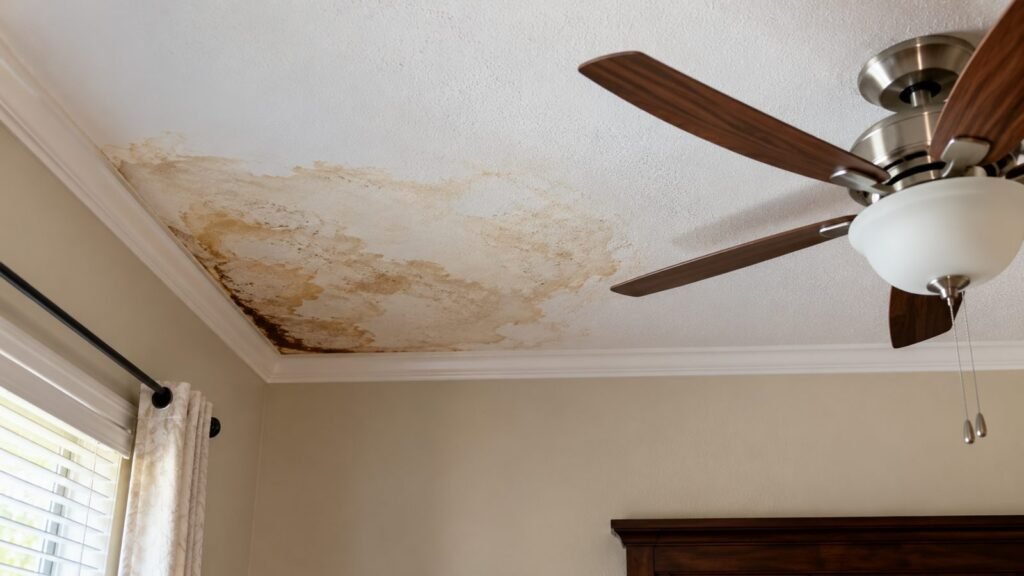
Why it happens so often in Florida
Our long cooling season means the air in the attic is hot and damp for most of the year. Add a small roof leak, a bathroom fan that vents into the attic instead of outside, or an AC drain line that backs up, and moisture has a place to collect. Insulation sitting in that damp spot can stay wet for a long time.
Can you just dry it out?
Sometimes a small, fresh wet spot can dry out once the leak is fixed. But if the insulation has been wet for a while, smells musty, or shows mold, it’s time for it to go. Moldy insulation can keep spreading spores into the attic air, and some of that air finds its way into your home through gaps around lights and vents.
The first step is always fixing the source of the water. There’s no point putting in new insulation if the roof or the AC line is still leaking.
How removal and replacement works
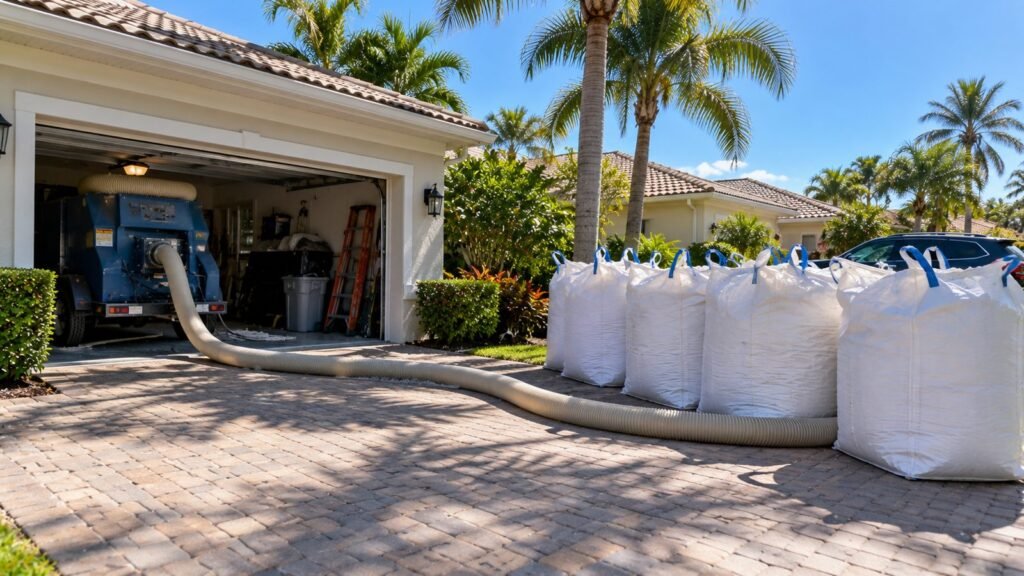
We use a large vacuum hose that runs from the attic straight out to bags outside. The old insulation never comes through your living space. Once the attic floor is clear, we can seal the gaps around lights, pipes and wires, then blow in a clean, even layer to the depth your home needs. You can read more on our attic insulation removal and replacement page.
When a top-off is enough
Not every wet spot means a full removal. If the problem is small and the rest of the attic is dry and clean, we may only need to pull out the damaged area and top off the rest. We’ll show you what we find and tell you honestly which one makes sense. If you’re not sure what you’re looking at, our post on the top signs you need new attic insulation is a good place to start.
Common questions
Is moldy insulation dangerous? Mold in the attic isn’t something you want spreading spores into your home’s air, especially if anyone in the house has allergies or breathing problems. The safest move is to fix the water source and remove the moldy material.
Will my homeowners insurance cover it? It depends on your policy and what caused the water. Sudden damage from a storm is treated differently than a slow leak. Take photos before anything is cleaned up and call your insurance company to ask.
How long does removal take? Most homes take one to two days for removal and fresh insulation, depending on attic size and what we find.
Get it checked
REINSULATE is a veteran-owned, fully insured insulation company serving Bradenton, Sarasota and the rest of Manatee County. If you’ve had a leak, a musty smell or a stubborn ceiling stain, we’ll come out, look at your attic, and give you a clear, free estimate. Request your free estimate or call or text 941-705-0305.
