
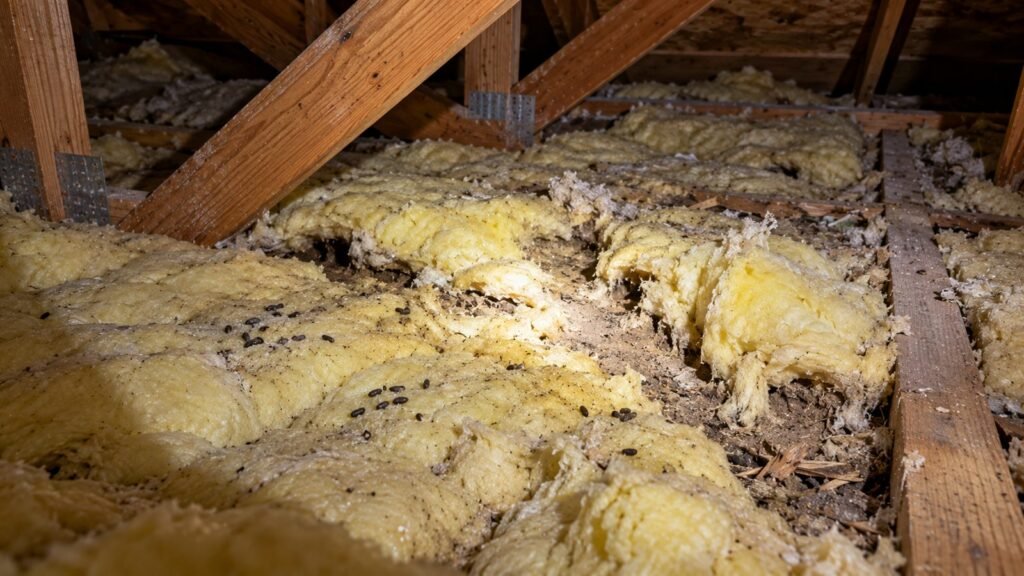
To a rat or a squirrel, your attic is a warm, dry, quiet place full of soft nesting material. In Florida, roof rats are especially common, and they’re good climbers. Once they find a way in, your insulation is usually the first thing they ruin.
Signs pests are living in your insulation
- Scratching or running sounds overhead, often at night
- Droppings near the attic hatch or along the tops of walls
- Tunnels, trails or flattened paths through the insulation
- A sour or musky smell from the attic
- Chewed wires, ductwork or the paper backing on old batts
What pests do to insulation
Rodents pack insulation down as they move through it, which cuts its ability to slow heat. They tear it apart for nests, leaving bare spots between the joists. They also leave droppings and urine behind, which you don’t want sitting over your ceilings. Even after the animals are gone, the mess and the smell stay.
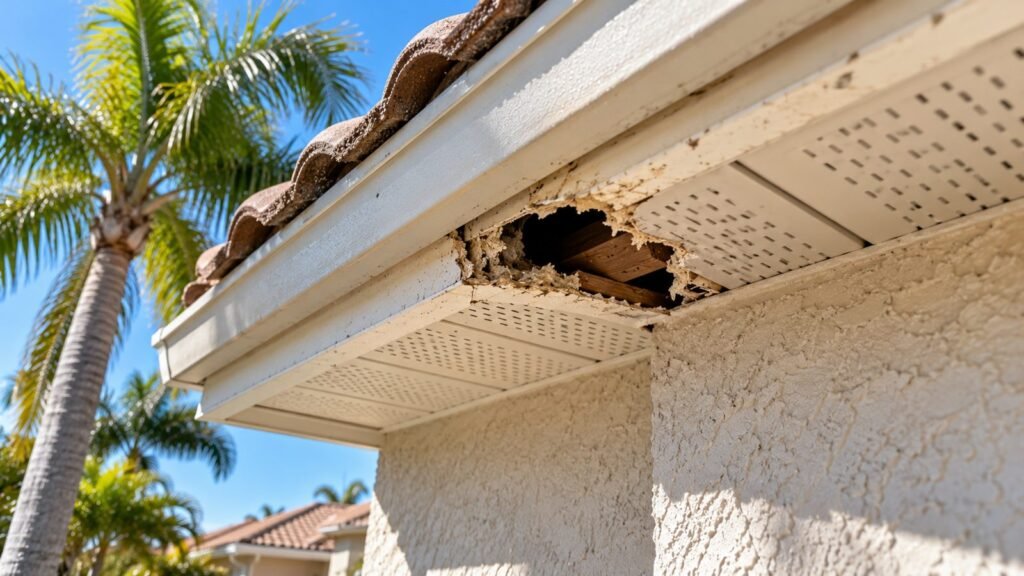
Step one: get them out and close the gaps
Before anyone touches the insulation, the pests have to be gone and the entry points sealed. A pest control company can trap and exclude them and close up gaps at the soffits, roof vents and pipe openings. If you put new insulation in before that’s done, you’re just giving them a fresh bed.
Step two: decide if it needs to come out
If there was only light activity in one corner, we may be able to remove that area and top off the rest. If droppings and nests are spread across the attic, the cleanest fix is a full removal. Our post on wet and moldy insulation covers the same choice for water damage.
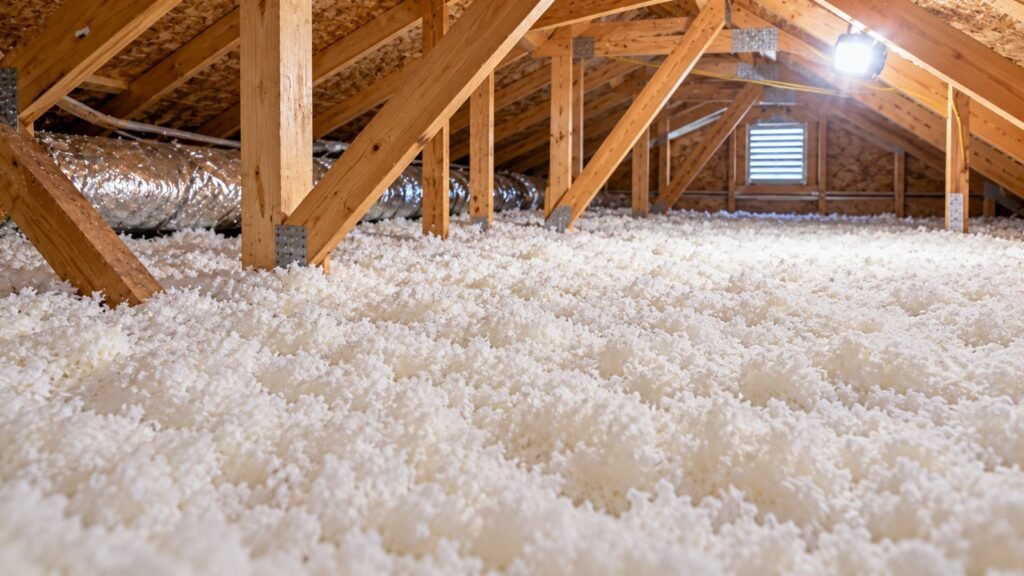
Step three: start fresh
We vacuum the old insulation out through a hose to bags outside, so nothing gets dragged through your home. Then we seal small air leaks in the attic floor and blow in a clean, even layer of new insulation. You end up with a cleaner attic, better comfort and no leftover smell. Learn more about our attic insulation removal and replacement service.
How to keep them from coming back
- Keep tree limbs trimmed back from the roof
- Have entry points checked once a year
- Don’t store pet food or birdseed in the garage where rats can get to it
- Call quickly if you hear noises again, before damage spreads
Why Florida attics attract pests
Our mild winters mean rodents and insects stay active most of the year. Many Florida homes have soffit vents, roof vents and gaps around pipes and wires that are just big enough for a rat to squeeze through. Once one finds its way in, the soft insulation and steady temperature make the attic an easy place to stay.
Common questions
Can I just spray the attic and leave the insulation? You can, but droppings, urine and nesting material stay behind. If there’s a lot of it, removal is the cleaner fix.
Do you trap rats? No. We’re an insulation company. Work with a pest control company to remove the animals and seal entry points first, then we’ll handle the insulation.
How long does a removal job take? Most homes take one to two days, depending on attic size.
Get your attic checked
REINSULATE is a veteran-owned, fully insured insulation company serving Bradenton, Sarasota and the rest of Manatee County. Once the pests are handled, we’ll look at your attic and tell you honestly what it needs. Request your free estimate or call or text 941-705-0305.
